Thursday, September 26, 2013

Midterm Scene Assignment

The scene I chose is a very critical scene from The Avengers. The scene comes from the midpoint of the movie and can be considered the build up to the lowest low. Our heroes gather together in one place for the first time. All of their story arcs have lead them to mistrust each other and SHIELD. Now they are given a proper reason to mistrust SHIELD, and with a little push from the villain, they fall apart almost instantly. This scene is a linchpin of the entire movie. Story-wise this scene sets up the heroes failure and drives them to the edge of the cliff. Filmwise it's a very well shot scene that toys with classic camera movement in a new and interesting way.
The style of the shot, the shot's composition, begins with classical shot/reverse. However, even this traditional shot/reverse is forced to accommodate five characters instead of two, often multiple characters in a single frame.

The introduction shot is wide long shot establishing shot of the room that the scene will be happening in. The framing here is quite interesting. Our heroes are bunched up together on the left of the frame with the entire wide open room being empty to the left side. We already see a feeling of the heroes being forced together, bunched up tightly. Tony Stark and Bruce Banner are allied against Nick Fury. Stark and Banner sit side by side facing Fury.The translucent computer screen Banner and Fury are working on becomes a physical wall between them and the man.


Shot/reverse, the previous information becomes much clearer. We see a framing of Bruce and Tony against Fury. It’s two sides. The two are united against their ally. Fury is uncomfortable. He can already sense the situation is bad for him. He’d framed dead center of the shot. Shot/Reverse is quick, following the flow of their conversation.

Cut away to the gun entering frame.Using Hitchcock's rule we know the gun is important as it’s now the largest thing in frame.

Captain in his full shot, upward angle. He has dominance over the conversation. His realization of Fury’s betrayal of the group’s ethics has made him strong as an individual. The camera is introducing him into the conversation with power, forcing Fury even more onto defense.

Again framing is key. Fury is alone, all the others are on the right side. Right now he’s the enemy and everyone is united against him. The gun is in front, reminding us why Fury is a bad bad dude. Stark still has his walls up. He is protected from real emotion. It’s gotten bad, but it hasn’t tipped yet.

The camera pans, it doesn't cut here. This is the start of interesting camera movement. Fury walks over, trying to calm Captain. Captain’s back is to us, now his walls are up. He’s been fooled before, he doesn’t intend to be again. He’s mistrustful.

Stark has removed his walls and engaged the conversation, now. He has moved the screen from in front of him and used it to show that Fury is lying, but in doing so he was forced out of the role of mirthful spectator. Now he is involved and his emotions are involved too. The conversation is becoming faster with four characters.

Fury realizes he’s in a losing situation here. He can’t explain himself as everyone has information they aren’t meant to have.His deceit and tricks aren’t working. Notice the framing. He is quite literally in a corner.

Thor and Black Widow enter the room. Both are framed together, a new faction. Five people are now in the room.


Bruce is now framed alone. Tony has left his side. They are becoming more isolated as the room gets more crowded. Bruce is framed tight. He seems large in the frame, taking up much of it.

Focus shifts from both to Black Widow as she pushes forward, Thor is edged to the side of the frame. She is desperately trying to get Bruce to leave and remain calm. She knows this situation is bad.

Again Fury is framed near the center, and alone. He’s isolated and surrounded. His emotions begin to rise.

The next shot is critical. While the focus is on Banner the scepter is large and glowing in the foreground of the shot. Your eye is drawn to it. Again we are drawn to Hitchcock's rule. Suddenly the secret of the shot begins to clear up. We see everyone gathered in the room and the scepter, drawing a link between them and it.

The next shot has Banner questioning Fury. His emotions are rising. His back is to us. Tension is building. As Banner gets more upset fears rise.


Again we cut back to Widow, the cutting is becoming very fast now. She’s framed farther back, as if she’s backing away from Banner Banner is framed dead center now with the light behind him.  He feels trapped in by the window behind him and the hanger outside the room. Suddenly he feels very crushed in.

Fury is trying to explain himself. The camera takes an upwards angle again. Fury once more has the power.


Here the camera cuts between Thor and Tony to give their reaction to Fury’s revelation before finally it cuts back to Fury. The camera has shifted to no longer show Captain at his back but Thor at odds with him. Thor has been forced into the argument.

A new establishing shot. Now everyone has backed away from each other. The tension is momentarily released and this allows Nick a few moments to speak uninterrupted. He explains why they’re in the situation they’re in.

Nick Fury is facing the camera now, speaking directly to Thor and the audience. Suddenly his motivations are made plainly clear. However this pushed Thor even more at odds.

Fury continues to speak, but now he and Thor are on complete opposite ends of the frame. They are divided.


The cutting picks up pace again here to show each person’s reaction. They're all alone, with backs to the wall. They all feel boxed in. Finally we cut back to Fury.


The framing here is very deliberate. Fury is at the front of the frame, but Stark is at his back. As soon as Fury speaks Stark cuts in to cut him down. Now the camer pans and trucks across the room, not cutting but flowing between each character. First to Stark, briefly to cap, then to Stark but now he’s framed alone.  Back to Fury and Cap whom are now framed together. Sides are shifting, everyone’s beginning to talk at once.


A brief cut puts us behind Stark’s back. He’s pushed on the deense. Everyone is talking. The camera is now at an unnatural canted angle. Everything is wrong. The camera pushes through to focus on Fury, then Thor, Then Black Widow, Then Bruce. Everyone is together but opposed. It’s no longer cutting at all, it’s flowing. Finally the camera settles on the glowing scepter. It rises over the scepter as the noise of the argument continues. Finally be slowly lower showing everyone upside down. It’s all painfully clear. The scepter is symbolic of Loki, and he’s managed to turn the team upside down, fighting each other instead of him.

Friday, September 6, 2013

Blog Post #3 Motivated Camera Movement

The goodfellas intro is amazing camera work. A long held smooth steadicam shot that shows how easy it is for our protagonist to go where ever he wants. It's a visually impressive scene requiring hundreds of extras and actors, but we also learn a lot about our character's confidence and his influence over everyone around him. This scene is instrumental in setting up the tone contrast for later and our main hero.


The flowing intro to Hugo gives us long sweeping shots carefully edited together. The absolutely brilliant CGI work mixed with shockingly good camera work makes this whole scene a delight to view. The washed out colors of the city contrast with the lights of the night and of the gray clouds and the colorful people. It's an entrancing scene of sweeping flowing motion and of gorgeous visuals scene in a way that only film can show us.


Blog Post #2: 5 Favorite Film Scenes


This chilling scene from No Country for Old Men delivers on all levels. They use the classic hollywood style for the introduction. A wide establishing shot. Shot reverse for the conversation. Gradually moving in closer for the building drama. However every shot holds just a fraction too long and audio is mixed almost silent to create a grindingly slowly build of tension that tightens and tightens on you, making you more and more nervous. The terrifyingly cold dialogue and acting put more and more weight on the scene until finally it explodes.


Wall E's opening is a drawn out silent scene which explores the setting, main character, tone of the film, and the world in about two minutes. We see the opening music piece which explores themes of exploration, going beyond your comfort zone, and the larger world beyond the one our hero is familiar with. The howling winds and the hollow empty sounds of a dead planet contrast the bombastic music and the visuals zoom from a beautiful but empty universe to the hollow empty shell of a planet. Each shot brings us closer to the planet and to the tiny little robot wandering this world all alone. Finally the music returns but not as an abstraction, instead as a product of our hero. As such the song becomes symbolic of him. All with no dialogue.


So I once listened to a man explain the problems of the prequels versus the original star wars trilogy then he told me how the light sabre fights were one of the biggest problems. I was aghast at the notion. With all the plot problems, overuse of CGI, lack of practical effects, and the frustrating bland characters I felt like the light saber fights were one of the last things you should worry about. However as he explained the original scenes I began to understand. There was no advanced choreography in the original version. These weren't acrobatic or complex fights. They were raw and emotional but told a story. We see Vader toying with Luke, we see Luke being compelled to use emotion to hit harder and faster. We see characters being played out even in just the fights. These weren't overblown acrobatic hyper choreographed dance numbers, these were emotional confrontations between two complex characters and every gesture held meaning for the characters.


This scene is both tense and hilarious. As Indy carefully prepares to swap the two we see the camera hang on him for long periods only cutting away to show his ally. He nervously acts as the camera slowly moves in on him until finally he makes the swap and the tension releases... For a second. Then it's quick cuts. Each shot is short but close to Indy. We see camera movement and dynamic shots of our hero as he runs through trap after trap. Finally we see a wide shot. Every cinema instinct was have tells us this wide shot is the end of the scene. However as the wall begins to crumble we realize it's not over yet. The boulder falls and now we have the amazing shot of floating ahead of indy as he runs, a unique perspective very reminiscent of Hitchcock's 'running from the crop duster' sequence.


What can you say about this scene that isn't obvious? Incredible music drives the tension through the roof. The slowly alternating shots give us a building tension that makes your heart pound in your chest. Your combinations of close ups of our three main characters contrasted against long shots of them backing away from each other. The long shot of all three surrounded by graves and you know before it's all done at least two more graves will be added. Then just as we're ready the music cuts out and we hear only the crowing of birds. A shot of each man. A shot of each gun. The music gradually builds back in. This is an absolute mastery of tension so that when the shot is finally fired everything after is an instant satisfying feeling of release.


Saturday, August 24, 2013

Blog Post #1: Top Ten Things About Me


My top ten will focus on films. I wont number them as I don't have any sort of ranking for these movies. They're all really important to me in different ways.


Kill Bill introduced me to Tarantino and the idea of the "director as DJ". I read an interesting article that explained the concept to me years later, but watching the film taught me that phrase on a more basic level. A director takes everything he loves and puts it into new works. Taking things that came before him like styles, genre, and cinematography and 'remixing' them into something new.
Django Unchained represents the epitome of the Tarantino style. The shots are slow, drawn out, carefully inauspicious during quiet moments so that the fast cuts and frenetic style of the action will come with a surge of motion you don't get in many films. The blending of antebellum south and spaghetti western provide a new fresh take on the genre. A driving revenge narrative with a bit of fun sprinkled in to take the edge off the brutal violence. Graphic over the topic gunfights juxtapose brutal realistic down to earth beatings which lend these scenes the appropriate weight. This film is mean an real and yet fun and playful and the mix allows you to appreciate both sides fully.


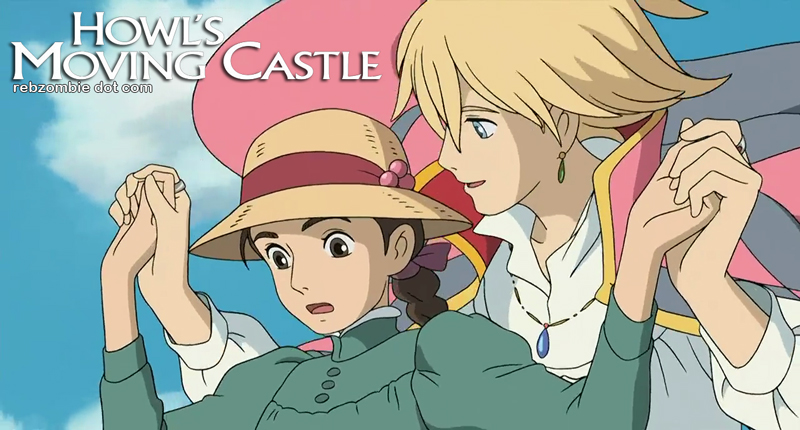
Howl's Moving Castle is far and away my favorite Miyazaki film. blending Eastern storytelling with Western mysticism this film captures a strong story and a whimsy that is lost on much modern film. This is one of the most  fantastically heartening and fun films ever produced and it rivals anything in the Disney catalog for family enjoyment while bringing more beautiful animation and a compelling deep narrative.


Princess Mononoke by Miyazaki is perhaps his most effective story driven work. Lacking the lighthearted fun of other Ghibli productions this piece takes a more mature pace and tone. It deals with elements of environmentalism in a unique way, forcing the audience to look at what humanity has done to the world from the view of nature. And yet the women destroying the forest are providing themselves the money and lifestyles necessary to live in a male dominated society they rejected. Themes of feminism paint the backdrop of this film as Mononoke and the factory working women demonstrate themselves to te uniquely competent female characters. No one in this film is evil, no one in this film is good, it is an objective look at nature versus humanity where both sides loose when they compromise.


The Avengers is not a masterpiece of cinematography or complex narratives. What it is is a celebration of superheroics and fantastically fun.  I struggle a bit between the inner film snob and the inner nerd, but what makes it easier is the fantastic characterization and scripting. Every scene pushed the story forward and almost every character had a narrative arc. For a cast with six protagonists to juggle this makes the film extraordinarily ambitious and extremely effective.  It's a well written, well produced popcorn fest that celebrates it's heritage and I loved it.


The Long Goodbye is about the most perfect adaptation of a book to film that there ever has been. The update to the classic noir formulas with new film making techniques makes this the true heir of noir and earns the title of neo-noir. The methodical slow pace of the piece with long shots lingering on a subject almost a second too long for comfort makes it incredibly fulfilling to watch. Every reveal comes so carefully paced that you're forced into the almost dour pace of our protagonist as he walks slowly towards the truth he so loathes. Our hero begins the piece a cold distant figure wandering through his life alone with nothing but his  By the end we understand why he is so alone. And everything between is fascinating to watch and gripping while never needing high octane action or shoot outs to keep you focused.


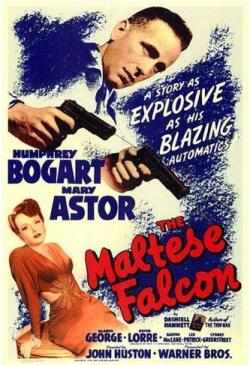
The Maltese falcon is a seminal piece of noir film history. It epitomizes the genre and gave us the classic Bogart noir performance. While I'm a big Marlow fan and would normally list The Big Sleep, this piece is just too good to ignore. Maltese Falcon influences the way I think about character motivations and mysteries to this day. The performance of Bogart, wildly switching between intense, scheming, and quiet show us a complex character who adapts to any situation. You only begin to truly understand him in the final moments of the piece.


Sherlock may not be a film in the theater, but with an hour and a half episodes and three episodes per series the show certainly produces enough content to quality. But more than that the style and expert craftsmanship which goes into each series elevates what can be considered television quality. The expert scripts, amazing characterization, and the well crafted mysteries have proven that a television series doesn't need to be limited by the medium. Shows like this, Breaking Bad, and The Walking Dead are proving that the difference between Film Quality and Television is diminishing. 


The god father is a film made famous almost entirely by the director. The shot composition showing the corruption of a man from an upright citizen to a a mob boss is compelling and dramatic. Each shot is integral to the piece, and the final scene juxtaposing the ceremony with the murders of all the rivals is an inspired scene that simply hasn't been matched. Imitated but never recreated. Simultaneously harkening back to the dawn of film with D.W. Griffith's simmilar trick of cutting between two scenes while also using music, shot composition, and scene choice to show how far the medium has come. 


It's simply one of the most important pieces of film in history. The darkness that is unrelenting, the oppressively bleak look at humanities' sin. Schindler's moral awakening, but refusal to act, and the guilt he feels, is a story that is so destructive only because it is true to real life events. The fact you know men like him existed and that this evil is not drama but history makes everything so much more devastating. The pain of the music and the shot choice makes you ache as you simply endure the run. As Schindler changes and does all he can, and yet throughout it all he wonders if he couldn't have still done more. This film shows human kindness during the most bleak and dark period in modern human history.